
Solar Eclipse update
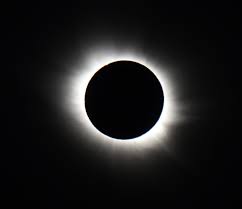 Last week I wrote about photographing the upcoming solar eclipse and suggested not bothering. I know, however, that people will still try to do it, so here are some more tips from Rockbrook Camera on what to do. These tips, mind you, aren’t for your camera phone. These tips are for a DSLR camera.
One thing to know is that solar filters are important. You don’t want to point your camera directly at the sun. However if you want to photograph the total eclipse while the moon is covering the sun, you don’t need any filter over your camera. Once the sun starts reappearing, use the filter again.
Not all lens filters are safe for direct viewing of the eclipse. Only the use of an approved solar filter will ensure the safety of your eyes and the camera’s sensor.
To get your picture, put your camera on a tripod and use a remote shutter cable. Turn off auto focus and image stabilization. Set the lens focus to infinity.
Use live view on the camera’s LCD screen to find the sun. Zoom out to find the sun then zoom in as close as you can.
With the camera in manual mode, use 1/1000th for your shutter speed, f/11 for your aperture, and 400 ISO as a base exposure. Try bracketing a few stops in each direction to find out what works best. For lenses, a minimum focal length of 300 MM is needed but 400 to 600 MM is best.
Keep the solar filter on the camera and your viewing glasses during all partial phases of the eclipse. You may remove the filter during totality but put it back on as soon as totality ends.
Plan your location carefully well in advance and decide ahead of time how you will photograph the eclipse.
Determine how much time you want to spend photographing the eclipse and how much time you want to spend enjoying the view. Either way, be prepared.